



The Shakya clan, the ancient republic of Kapilavastu, is best known today as the birthplace of Prince Siddhatha – the Buddha. Understanding how the Shakya Government worked will help us understand the political and social environment in which Buddha was born. Often referred to as the Shakya Gaṇa-rājya or Shakya Gaṇa-saṅgha, the Shakya Republic had a distinctive system of governance with capital city at kapilavastu, quite different from the monarchies of other Mahājanapadas of Ancient India.
By Niketan Shegokar, Bio bottom of feature
One of its most remarkable features was that it was not a monarchy. Unlike neighboring kingdoms such as Magadha or Kosala, the Shakya territory was ruled collectively, not by a single king, but by a council of elders drawn from noble Kshatriya families.

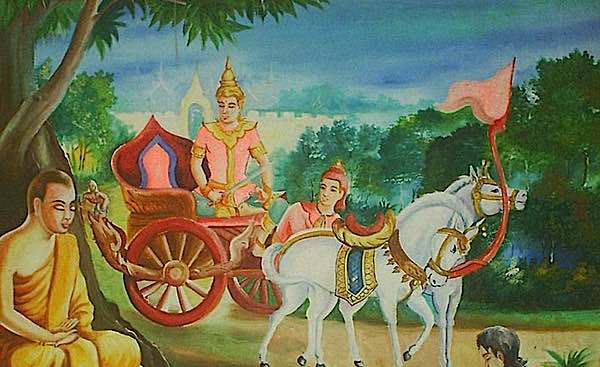
1. A Republican Oligarchy
The Shakya system was based on a clan-centered republican oligarchy [1,2,3], a model that was common among several Gaṇa-saṅghas (republican communities) of that era. Governance was conducted by an assembly of elders [4], comparable to a modern-day council or senate, who convened in a hall called the Santhāgāra (Council Hall) [5].
Although no direct archaeological evidence of the Shakyas’ Santhāgāra has been conclusively found, partly due to the debated location of ancient Kapilavastu (Piprahwa in India or Tilaurakot in Nepal), similar assembly halls have been discovered in other contemporary republics such as the Licchavis, Mallas, and Vajjis.

2. Decision-Making and Collective Rule
Decision-making was a collective process guided by debate, discussion, and consensus (if possible), with voting when necessary. The assembly held discussions on important matters such as war, peace treaties, justice, taxation, and rituals. Each elder in the council had a voice, reflecting the Shakyas’ preference for shared governance over autocracy. [6,7]
3. The Role of the Chief (Rājā)
Though there was no hereditary monarch, the Shakyas did appoint a chief (rājā) from among the clan elders. This leader acted more as a President, than a sovereign king, with powers limited by the council’s authority [4,5,6].
The selection process for the rājā was elective, not hereditary [7,8]. The Gaṇa-parishad (assembly of elders) chose the leader [1,5] based on lineage, wisdom, military skill, and moral integrity [6,10]. Only members from certain noble families – including the Gautama, Bhaddiya, Amitodana, Suppabuddha, Devadaha (Devdutta’s family), and Bhagu lineages – were eligible for nomination [9]. These details are drawn from early Buddhist texts and historical accounts involving King Pasenadi of Kosala, though some names are debated among historians.

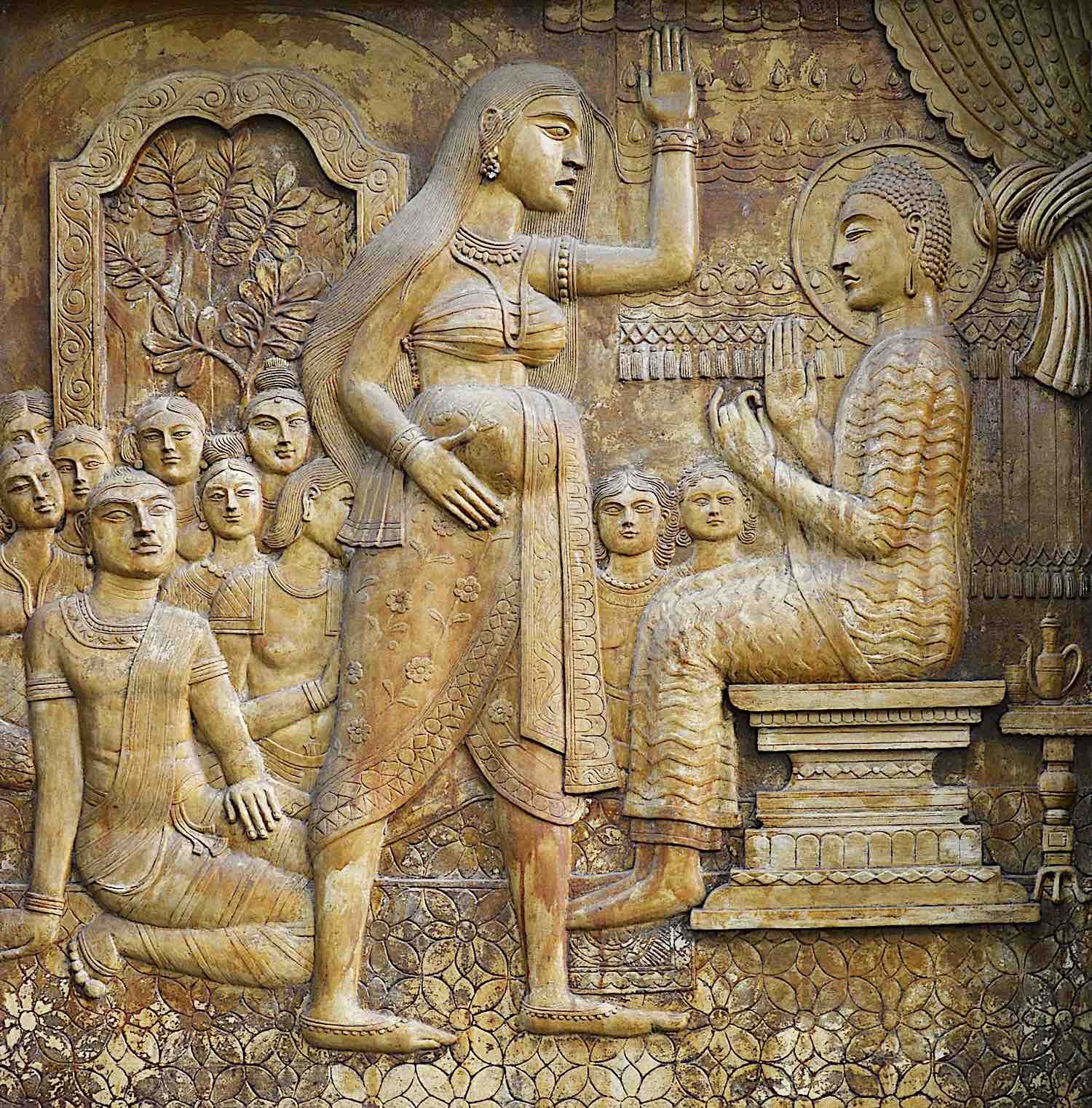
The chief’s duties included serving as a diplomatic envoy, military commander, and ritual leader within the republic [4,8,11]. Importantly, his position was not permanent – leadership could rotate among qualified elders [3,5,6].
For instance, texts record that when the Buddha returned to Kapilavastu after enlightenment, King Bhaddiya [12] held the title of rājā, elected by the Shakya assembly. Similarly, Suddhodana, the Buddha’s father, was likely elected as chief among elders [3,13,14] – referred to as “king” in popular parlance, though his authority was limited and constitutional in nature.


4. Roots of the Shakya System
The Shakyas’ republican organization can be traced to ancient Vedic tribal traditions [5,7,15], where leadership emerged through collective decision-making. Historically and geopolitically, this was a continuation of earlier tribal self-governance models that prioritized equality among clans.
Such republics – notably among the Shakyas, Licchavis, Mallas, and Koliyas [1,4] – valued consultation and consensus over autocratic rule. It is noteworthy that the Buddha himself modeled the structure of the Buddhist Saṅgha on similar democratic principles [6,16]
Conclusion
In conclusion, the Shakya polity represented an advanced form of governance for its time. The Shakyas of Kapilavastu were not ruled by a king, but by an assembly of elders who shared authority and responsibility. A chief or rājā was elected, not born into power, embodying ideals of collective wisdom, moral leadership, and civic duty.
REFERENCES:
- Basham, A. L. (1954). The Wonder That Was India (pp. 52–56). London: Sidgwick & Jackson.
- Drekmeier, C. (1962). Kingship and Community in Early India (pp. 60–70). Stanford University Press.
- Rhys Davids, T. W. (1903). Buddhist India (pp. 23–31,34–35). London: T. Fisher Unwin.
- Raychaudhuri, H. (1972). Political History of Ancient India (rev. ed., pp. 45–51). Oxford University Press.
- Sharma, R. S. (2005). India’s Ancient Past (pp. 118–120). Oxford University Press
- Drekmeier (1962), pp. 80–85 — structural comparison of republican voting in Shakyas, Licchavis, Mallas.
- Kosambi, D. D. (1956). An Introduction to the Study of Indian History (pp. 114–118). Bombay: Popular Prakashan.
- Jha, D. N. (1998). Ancient India: An Introductory Outline (pp. 91–95). Delhi: Manohar.
- Mukherjee, R. K. (1960). Ancient Indian Education (pp. 37–39). Motilal Banarsidass.
- Gokhale, B. G. (1966). Early Indian Polity (pp. 52–55). Deccan College.
- Thapar, R. (2002). Early India: From the Origins to AD 1300 (pp. 136–138). University of California Press.
- Ambedkar, B. R. (1957). The Buddha and His Dhamma. Bombay, India: Siddharth College Publications.
- Bareau, A. (1974). “The Historical Buddha”. Journal Asiatique, 264(3), 295–297.
- Bechert, H. (1992). The Dating of the Historical Buddha (Vol. 2, pp. 40–44). Franz Steiner Verlag.
- Gonda, J. (1975). Vedic Ritual (pp. 213–215). Brill.
- Schopen, G. (1997). Bones, Stones, and Buddhist Monks (pp. 245–250). University of Hawaii Press.